Amazon wants to put an AI memory on your wrist.
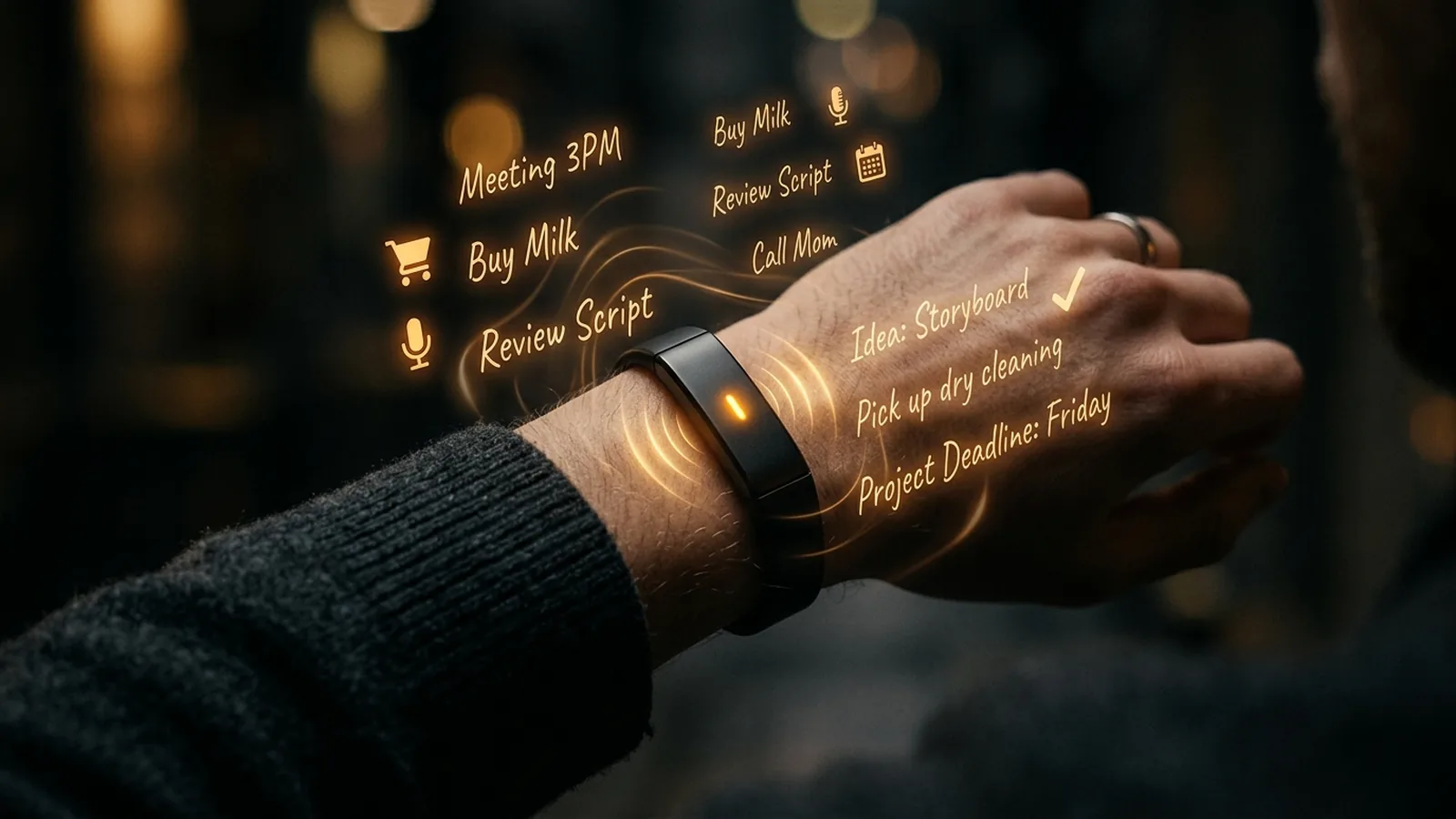
The company has unveiled Bee Frontier, a $74.99 wearable with microphones that can turn conversations into summaries, reminders, tasks and personal insights.
It can be worn like a watch or clipped onto clothing.
Amazon is also launching Bee Eclipse, a $99.99 credit-card-sized version that magnetically attaches to the back of a phone.
The pitch is simple:
You live your day.
Bee remembers the details.
Then Amazon's AI turns those details into something useful.
That is either extremely convenient or the beginning of a very strange privacy conversation.
Probably both.
What Bee actually does
Bee is designed around ambient conversation. You activate the device when you want it to listen. Its microphones process what is being said and extract useful information.
That could be the date someone suggested for dinner, an action item from a meeting, a book a friend recommended, a task you promised to do, notes from a lecture or details from a brainstorming session.
Those moments are then available in the Bee app as summaries, reminders and insights.
The idea is to stop taking notes and stay present in the conversation.
Amazon says it does not store the raw audio
This point matters.
Amazon says audio is processed in real time and deleted after processing. The company says transcripts are encrypted with keys created and controlled by the user's device.
The hardware also has a physical control for turning processing on or off and a visible indicator light when Bee is active. That is a much more privacy-conscious pitch than “Amazon records your entire day.” But it does not remove the social question.
If you activate the device in a conversation, the AI is still processing what another person says. Consent does not become irrelevant because the raw audio is later deleted.
The Amazon integration is where this gets weird
Bee is not just a recorder.
Amazon is connecting it to Alexa+ and Amazon.com.
With Alexa+, users can ask for summaries, reminders and to-dos captured by Bee. The Amazon shopping integration can use things mentioned in conversations to surface product recommendations. Amazon's own example is wonderfully on-brand:
You mention that you need dish soap.
Bee remembers.
Amazon can later recommend something to buy. That creates a completely new path between ordinary human conversation and commerce. Your shopping query no longer necessarily begins with typing something into a search box.
It can begin with something you casually said out loud.
It connects to the rest of your digital life too
Bee can also connect with services including Gmail, Google Calendar, Microsoft Outlook and Apple HealthKit. That lets it turn conversation context into actions such as drafting follow-up emails or creating calendar invites.
The product is therefore closer to a wearable memory layer than a simple voice recorder.
The hardware is surprisingly cheap
Bee Frontier costs $74.99.
Amazon says it lasts up to seven days on a charge, supports USB-C charging, includes dual microphones and has IP67 water resistance.
Bee Eclipse starts at $99.99 and promises more than 21 days of battery life.
There is also a Bee Pro subscription for $11.99 per month.
The free tier includes conversation summaries, recaps and 14-day memory.
Pro unlocks features including more integrations, unlimited recent conversation summaries and additional assistant capabilities.
Ambient AI keeps coming back
The technology industry has tried this idea repeatedly.
Humane tried an AI Pin.
Other startups built pendants, badges and dedicated recorders. Phones already have microphones and powerful AI apps. So why build another object?
The answer may be friction.
If capturing a moment requires pulling out a phone, opening an app and starting a recording, people do it less often. A device sitting on your wrist can reduce that action to one button. That is the whole ambient-computing bet:
AI becomes useful when using it stops feeling like “using AI.”
Zerionia view
The Bee Frontier is interesting because Amazon is not trying to replace your phone. It is trying to become your memory. That may be a much more powerful position.
If an AI remembers what you discussed, knows your calendar, sees your email, understands your habits and connects to the world's biggest shopping platform, it can become incredibly useful.
It can also become incredibly intimate. The future of personal AI may not be a robot you talk to. It may be a tiny device quietly collecting the context needed to know what you were about to forget.
For $75.