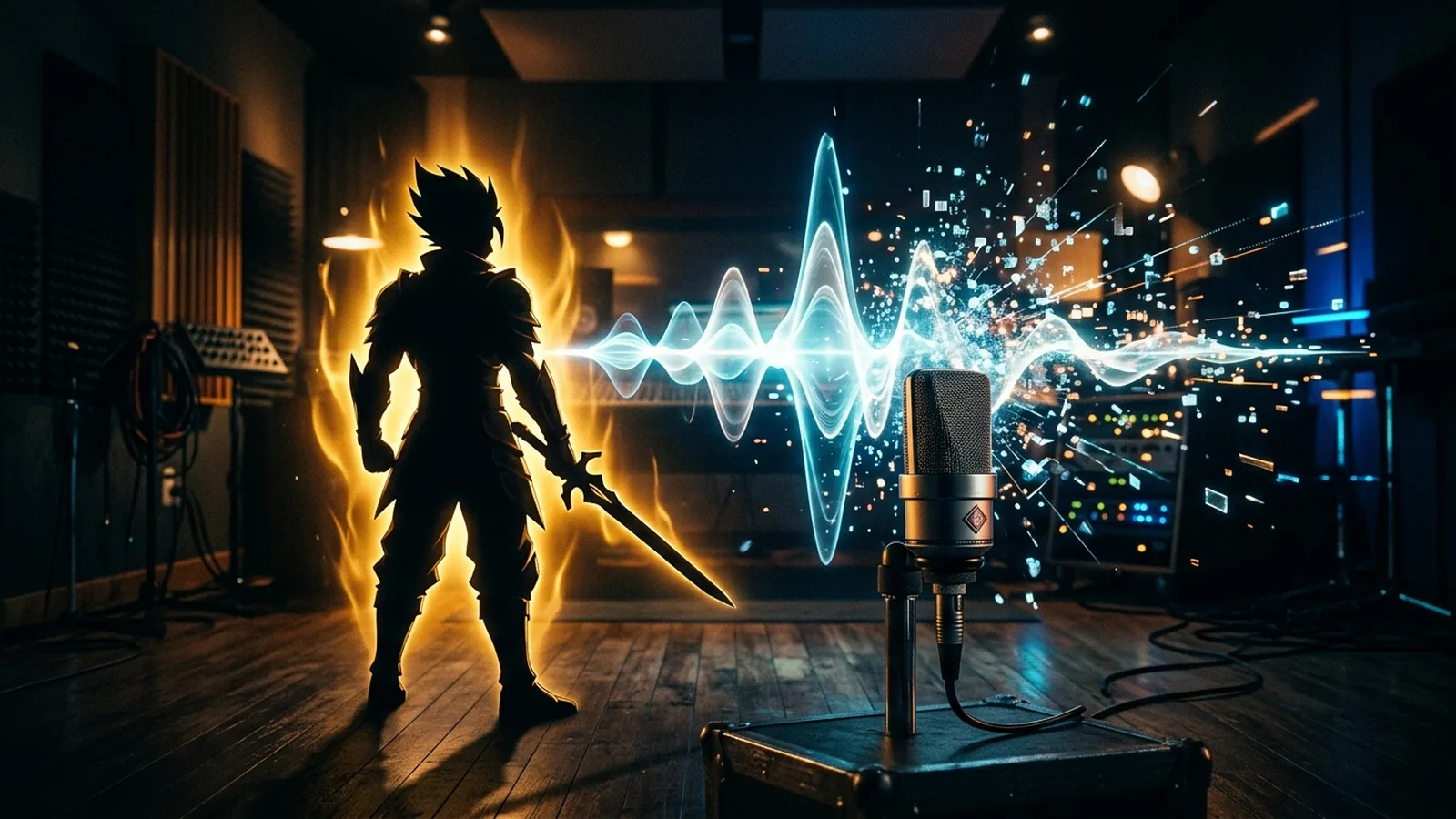
Goku has spent forty years fighting impossible enemies.
His voice actor has now found a very 2026 opponent: AI clones.
Masako Nozawa, the legendary Japanese performer who has voiced Goku since the original Dragon Ball anime began in 1986, has condemned videos that recreate her voice with generative AI without permission.
Her message is simple. AI itself is not the enemy. Taking somebody's voice without asking is.
And the timing is bigger than one famous actor.
The Japan Actors Union has just released its first detailed guidelines for how performers' voices should be used in generative AI.
“It has no heart”
Nozawa's comments were delivered as Japan's actors union announced the new rules.
In translated remarks circulated from Japanese coverage, she described unauthorized AI use of her voice as unacceptable and compared it to taking something that does not belong to you.
She also made a more emotional point. A synthetic copy can become technically convincing. But that does not make it the performance.
That distinction matters with a character like Goku. Nozawa has performed him for decades, across generations of Dragon Ball, movies, games and television. Her voice is not simply an audio texture.
It is part of the character's identity.
The union wants permission at every stage
The Japan Actors Union represents roughly 2,600 actors and voice performers.
Its new generative-AI voice guidelines revolve around three ideas:
Consent. Control. Compensation.
The union says performers should be told and asked before their voices are used for AI training or analysis. Permission should also apply when a voice model is generated. And permission is required again before synthetic output is published or sold.
The guidelines also reject the idea that a company should be able to buy unlimited future rights to a performer's voice with one giant contract.
That is a much stricter model than the “you signed once, therefore we can synthesize you forever” future many performers fear.
Japan has a particularly big reason to care
Voice acting is unusually important in Japanese popular culture.
Seiyuu are celebrities.
Fans recognize individual performers instantly. Anime, games and dubbed media create careers that can last decades. That also means voice cloning has enormous commercial value.
A convincing model could theoretically generate new dialogue from a famous performer without bringing that performer back into a studio. Technically, that is impressive. Economically, it threatens the job.
Culturally, it raises an even stranger question: Who owns a voice once millions of people associate it with a fictional character?
Nozawa is not saying “ban AI”
This is the part that will get lost in viral posts. The objection is not simply that generative AI exists. Nozawa has spoken positively about technological progress more broadly.
The issue is unauthorized copying. That makes the story much more interesting than “old actor hates AI.”
Her position is basically: Use the technology. But ask first.
And if somebody's performance is valuable enough to clone, it is valuable enough to compensate.
The rules are not law
There is another important catch. The Japan Actors Union's guidelines are industry rules, not a new criminal statute. They can define professional expectations and influence contracts.
They do not magically stop somebody outside Japan from training a voice model on clips found online. That is the same enforcement problem musicians, actors and creators around the world are facing.
AI generation is global.
Rights enforcement is still fragmented by country, platform and contract.
Goku makes this argument impossible to ignore
AI voice rights can sound abstract until the cloned voice belongs to one of the most recognizable characters on Earth. Then the problem becomes extremely easy to understand. Fans know what Goku sounds like.
They know who created that performance. And they can instantly hear why “the model can imitate it” is not the same as “the model owns it.”
Zerionia view
The next fight over generative AI will not only be about models and copyright databases.
It will be about identity. A face can be cloned. A voice can be cloned.
A performance style can increasingly be cloned too. The technology is moving toward perfect imitation. The social rule may end up being much simpler:
If it is someone's identity, ask them.
Even Goku apparently has a consent policy now.