
A physical product is usually information-poor once it leaves the manufacturer. You can hold a battery, a piece of clothing or an appliance in your hands and still know remarkably little about it. Who made the relevant components?
What materials are inside?
How was it manufactured?
Can it be repaired?
What is its expected durability?
What happened to it before resale?
How should it be recycled?
The European Union is trying to change that relationship with the Digital Product Passport. The idea is simple enough to explain in one sentence: Give products a persistent digital identity that exposes structured information across their lifecycle.
The implementation is considerably more ambitious. And in 2026, the concept moved closer to reality.
The registry is now operational
The European Commission made the Digital Product Passport Registry operational on July 20, 2026.
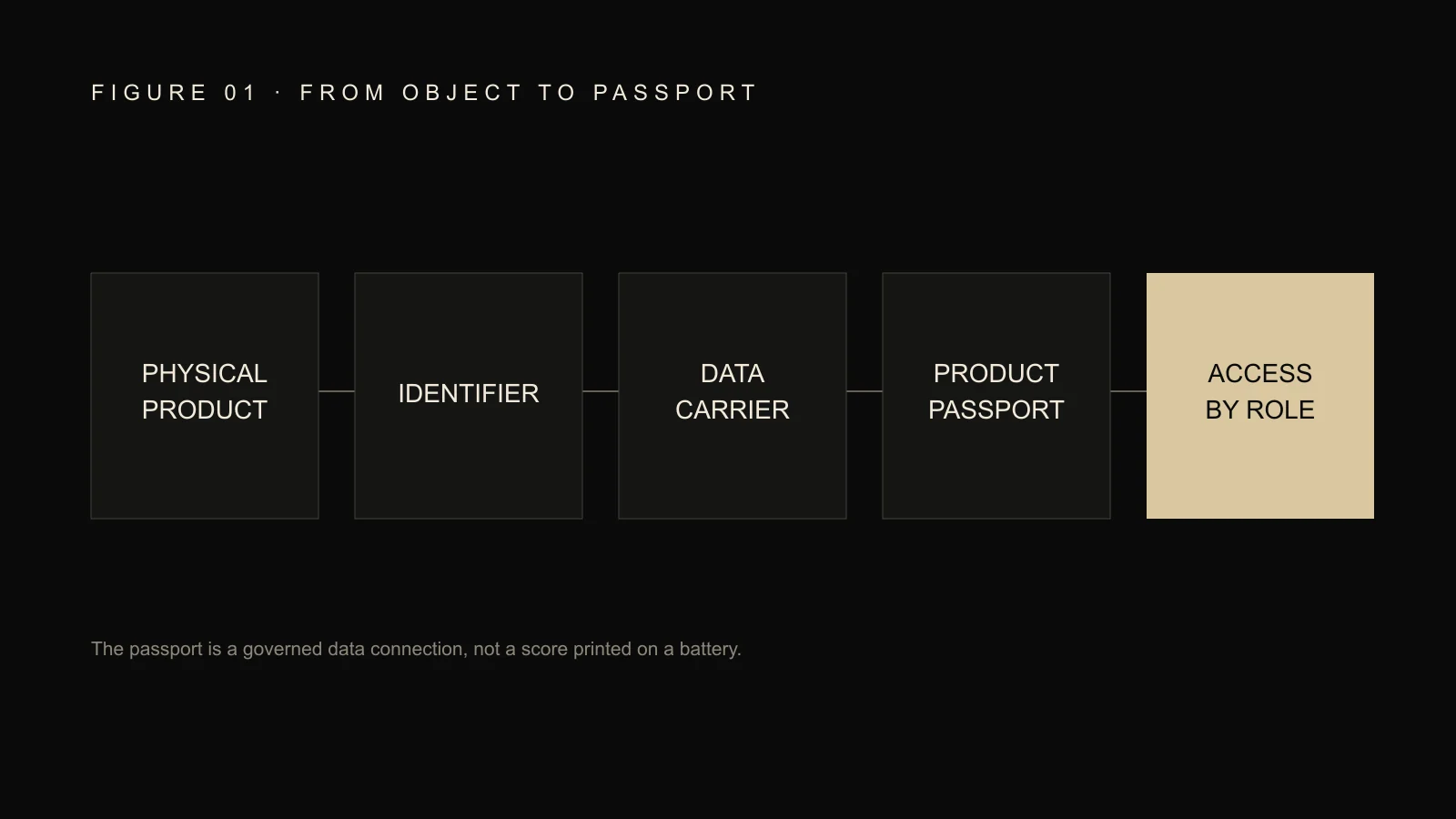
The registry is part of a wider technical system built around identifiers, data carriers, interoperability, APIs, data exchange and storage standards.
That sounds infrastructural because it is.
A DPP is not meant to be one central European database containing the life story of every object.
The Commission describes a decentralized system where detailed information is maintained by the responsible economic operator while the wider framework enables identification and access.
The QR code on a product is therefore only the visible edge of a much larger system.
Batteries are first
The first major compulsory product category is batteries.
From February 18, 2027, battery passports are scheduled to become mandatory for relevant categories placed on the EU market, including electric-vehicle batteries and certain industrial and light-transport batteries.
The Commission lists possible information such as:
identification and technical characteristics
manufacturer and economic-operator information
performance and durability
repair, reuse and recycling information
sustainability and circularity information
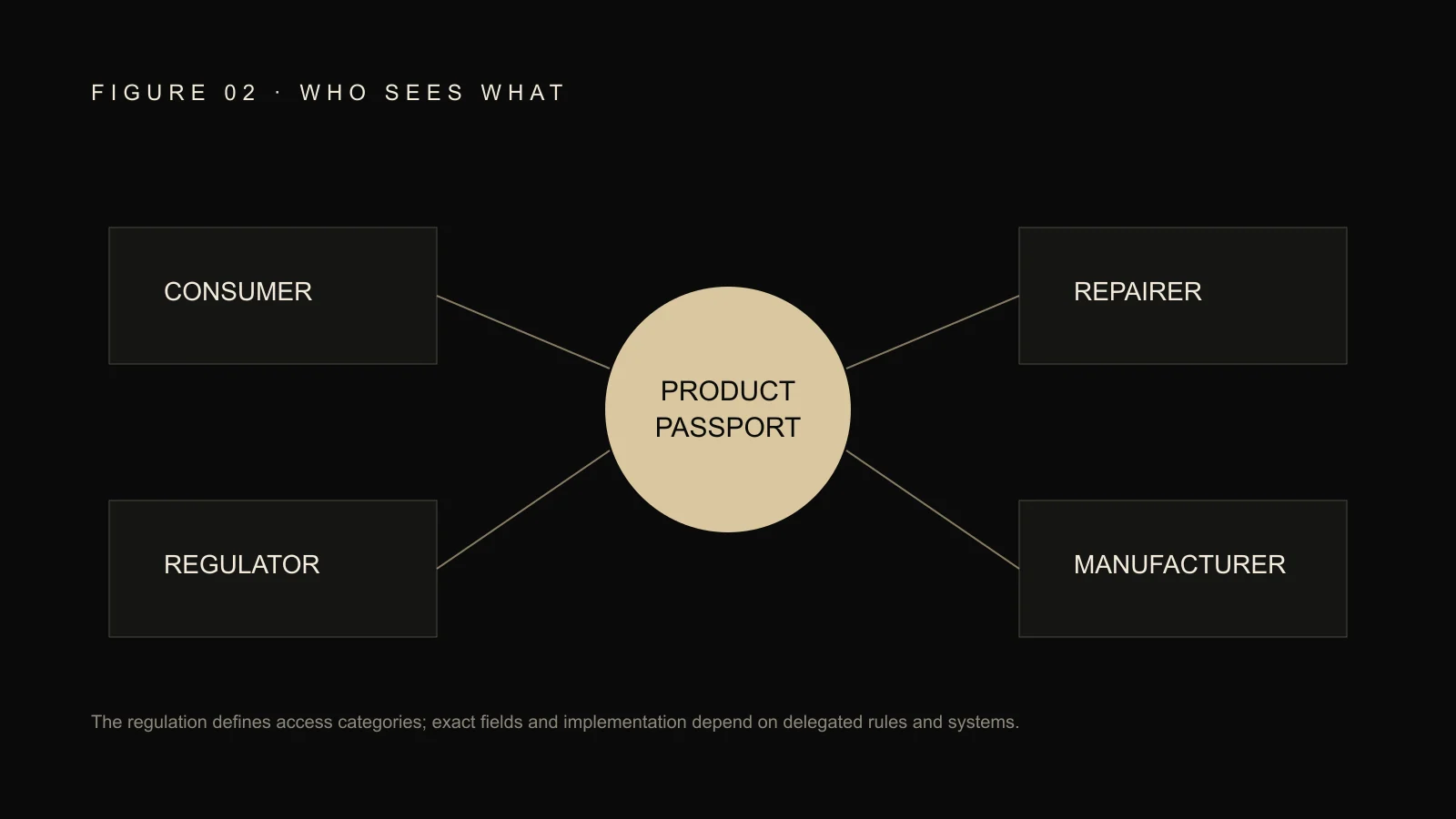
Access rights may differ depending on the data and actor involved.
That distinction matters.
A consumer, repairer, regulator and manufacturer do not necessarily need access to the same information. The real system is therefore not simply a QR code plus a public webpage. It is an access-controlled data architecture for physical goods.
Products are becoming queryable
This is the part that matters outside regulation. The web made companies queryable. Smartphones made places queryable.
APIs made software queryable. Digital Product Passports could make more of the physical economy queryable. Today, buying a used object often requires inference.
You inspect.
You trust documentation.
You search a serial number.
You ask the seller.
You rely on a third-party report.
A standardized product identity changes what can happen at the point of decision. A repairer can potentially retrieve relevant technical information. A marketplace can expose structured product details.
A recycling operator can identify material information. A consumer can access information that previously remained inside supply-chain systems. The DPP is therefore not merely a compliance artifact.
It can become an interface.
The most interesting products may sit above the passport
Standards rarely create the most interesting user experience themselves. They create the layer that other products can build on. Think about a battery passport.
The raw record may be useful. But the consumer question is different:
Should I buy this used EV?
A future application could translate passport data into a much more understandable view.
Battery identity.
Manufacturing information.
Relevant durability fields.
Service or repair context where available. Comparison against the expected profile of the same model. Warnings about missing or inaccessible fields.
Links to official documentation. The important word is “could.”
The usefulness of these services will depend on real-world data quality, access rights, interoperability and what manufacturers actually expose.
That is why 2026–2027 is a period worth watching rather than a reason to invent certainty.
A new class of data companies may appear
Whenever a previously opaque market receives standardized data, intermediaries appear.
Comparison engines.
Verification services.
Compliance tooling.
Marketplaces.
Analytics.
Inspection products.
Developer APIs.
The DPP framework could create similar opportunities across multiple industries as more categories come into scope. The Commission’s current roadmap points beyond batteries toward other products over time.
That turns the DPP into something larger than a battery regulation. It is an attempt to create information infrastructure for the Single Market.
The QR code is the least interesting part
QR codes are familiar.
That familiarity risks making the DPP look trivial.
Scan a code.
Read a page.
Done.
But a useful passport system requires far more:
persistent identifiers
data schemas
access control
interoperability
data quality
updates
responsibility for records
consumer-facing interpretation
long-term availability
marketplace integration
repair workflows
recycling workflows
This is infrastructure work disguised as a sticker.
Verdict
The Digital Product Passport will not become culturally important because Europeans suddenly become passionate about product metadata. It will matter if that metadata starts changing decisions. Which battery gets repaired.
Which used vehicle gets purchased. Which product gets recycled correctly. Which manufacturer can prove a claim.
Which marketplace can expose information competitors cannot. The registry going live is not the end of that story. It is the point where the story starts becoming operational.
Batteries are simply the first serious test.