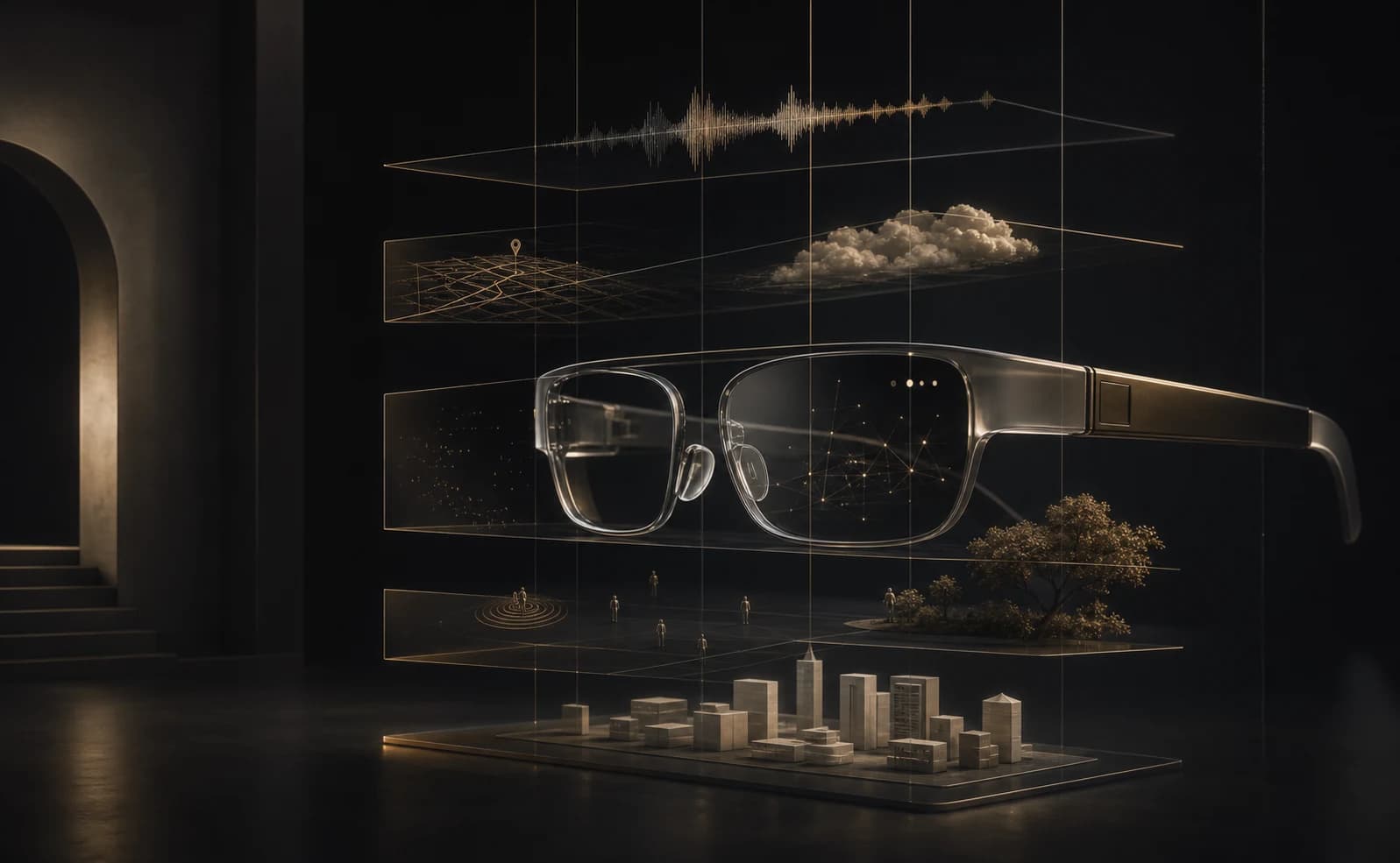
A proposed class action alleges Meta illegally used Facebook and Instagram photos to derive biometric information for AI systems and an unreleased facial-recognition feature built for its smart-glasses platform. Meta says the claims misrepresent its work. The case goes directly to the hardest problem in wearable computing: the people being scanned are not necessarily the people who bought the device.
Smart glasses have a user.
They also have everyone standing in front of them.
That second group is becoming the defining privacy problem for the category.
A proposed federal class action filed in Chicago alleges that Meta illegally extracted biometric information from Facebook and Instagram photos to train AI image systems and support an unreleased facial-recognition feature known as NameTag for its smart-glasses ecosystem.
Meta disputes the lawsuit and says it is not building a universal face database. The company also says NameTag has not shipped to consumers and that no final decision has been made about whether such a feature will launch.
But the case lands at a sensitive moment.
AI glasses are moving from novelty toward platform. Cameras are becoming persistent. Assistants are gaining more context. And the industry is approaching a capability that changes the social meaning of wearing a camera on your face: automatic identification of the person you are looking at.
NameTag changes the smart-glasses debate
Recording is already controversial. Identification is different. A camera captures an image. A face-recognition system attempts to turn the image into identity.
That identity can then connect to a much larger graph of information: social profiles, public posts, contacts, workplace data, location history or commercial records.
The technical jump from “I can record what I see” to “my glasses can tell me who I am looking at” is small compared with the social jump.
It transforms the device from a camera into an identity interface.
FIG. 01
Smart Glasses Vision Surfaces
01
Current Public Surface (Ambient AI)
Capabilities: Scene description, text translation, landmark recognition, object search. Safeguards: Hardcoded identity filters; refusals to identify persons from facial features. Legal Status: Operates under standard multimodal vision policies.
02
Alleged Biometric Surface (NameTag)
Capabilities: Real-time identity resolution, social profile overlay, facial indexing. Risk: Irreversible de-anonymization in public spaces. Legal Status: Subject to statutory biometric consent requirements (BIPA, CCPA, GDPR).
Zerionia legal and technical analysis
The bystander has almost no interface
Most privacy controls are designed around the person using the product. The owner can accept permissions. The owner can open settings.
The owner can disable a feature. The owner can review an account dashboard. The person standing across the room cannot.
They may not know the glasses are recording. They may not know a recognition system exists. They may not know which company receives the data or how long an identifier persists.
This is the bystander problem.
It is one of the most important product-design problems in ambient computing because the traditional consent model breaks down when the sensor belongs to someone else.
A smartphone camera at least creates an obvious behavior: a person raises a rectangular object and points it at you. Smart glasses erase much of that gesture. The camera is already facing wherever the wearer looks.
Why social-network data makes the issue bigger
Meta has an unusual advantage in this space. It does not only build hardware and AI models. It operates some of the world's largest identity-linked photo networks. Facebook and Instagram contain years of images, tags, relationships and public profiles.
That creates an obvious technical possibility: use a social graph to make recognition more useful. It also creates the exact privacy concern described by the lawsuit.
The plaintiffs allege that biometric information was derived from imagery without the consent required under state laws including Illinois’ Biometric Information Privacy Act.
Those allegations still need to be tested in court.
But product teams should pay attention regardless of the legal outcome because the underlying design question is not going away.
The owner of smart glasses has settings. The person standing in front of them usually has none.
Meta has been here before
Biometric privacy is not new territory for Meta.
The company previously shut down a large face-recognition system and deleted more than a billion faceprints after years of controversy. It also agreed to major settlements over biometric-privacy allegations in Illinois and Texas.
That history changes how new wearable-recognition features will be interpreted.
Even if a future feature is technically opt-in for the wearer, regulators and users will ask a second question:
What did the person being identified opt into?
Those are two different consent surfaces.
What the headline gets wrong
It would be inaccurate to say that Meta smart glasses currently identify every stranger a wearer looks at. Meta says NameTag has not shipped to consumers. The lawsuit contains allegations, not established findings.
And Meta denies building a universal database of faces.
Those distinctions matter.
The important story is not that a dystopian capability has definitely been deployed at scale. It is that the hardware, data assets and software architecture needed to build such a capability are converging, while the legal and social rules remain unsettled.
The next privacy fight is ambient
For the last decade, digital privacy mostly meant what happened on a screen. Which app collected your location? Which website tracked your clicks?
Which platform used your posts to train a model? Wearable AI pushes that debate into physical space.
A pair of glasses can continuously perceive the environment. An assistant can interpret that environment. A recognition layer can potentially connect perception to identity. An agent can then act on the information.
The stack becomes:
See → Understand → Identify → Retrieve → Act
Each step makes the product more useful.
Each step also increases the consequences of getting consent wrong.
What happens next
The lawsuit will test specific legal claims, but the broader product battle will unfold faster than the courts. Meta Connect takes place on September 23–24, with Meta explicitly promising updates across AI, AI glasses and VR.
Google has already announced Android XR glasses for this autumn with Gentle Monster and Warby Parker. The smart-glasses category is therefore entering a platform competition at the exact moment privacy expectations are hardening.
The companies that win may not be the ones with the best camera or the smartest assistant. They may be the ones that solve a stranger problem:
How do you build a computer that sees the world without making everyone else feel watched by it?
Zerionia takeaway
Smart-glasses privacy cannot be designed only for the buyer. The real product surface includes every bystander inside the camera’s field of view. As wearables move from recording toward recognition and agency, bystander control becomes part of the interface whether companies design for it or not.
### Internal links - Link to: Smart Glasses Matrix Lab. - Link to: smart glasses platform article. - Link to: future Google vs Meta glasses article.
### Hero direction Close crop of normal-looking glasses in foreground. In the background, multiple people are visible but their identities are represented as deliberately unresolved silhouettes, with one clean privacy shield layer between camera and identity. Avoid cyberpunk clichés and facial target reticles that overstate current deployed capability.
### Primary / high-quality sources - WIRED, “Meta Sued Over Training Data for Its AI and Face-Recognition Systems”: https://www.wired.com/story/meta-sued-over-training-data-for-its-ai-and-face-recognition-systems/ - Complaint linked from WIRED / CourtListener. - Meta public statements quoted in WIRED.
---