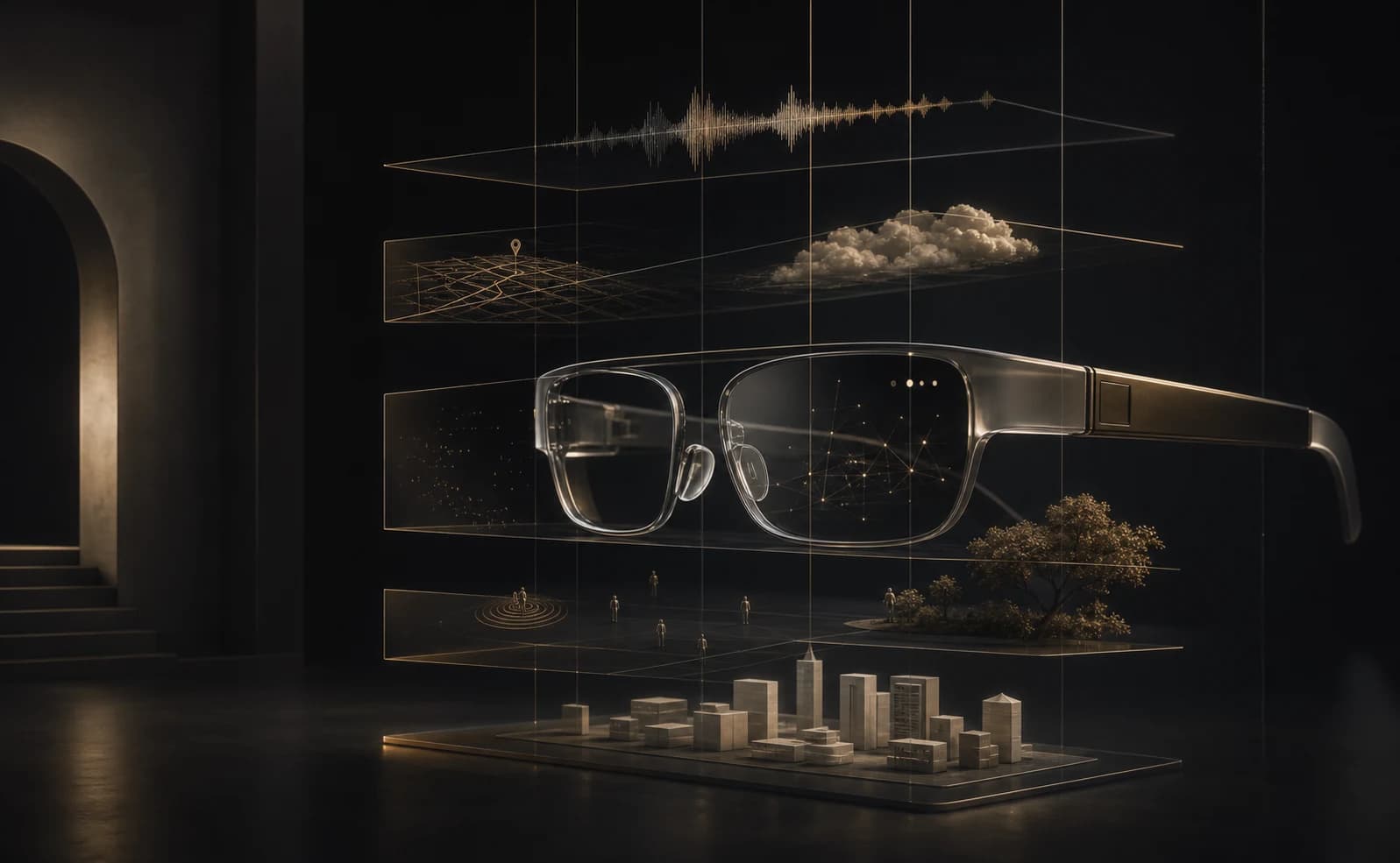
The easiest way to underestimate smart glasses is to think about the glasses.
Frames.
Cameras.
Battery life.
Prescription lenses.
Those things matter, but they are not the reason the category is becoming strategically interesting.
The bigger shift is that smart glasses are becoming a new software surface.
Google has said its first Android XR intelligent eyewear will arrive later this fall, beginning with audio glasses created with partners including Warby Parker and Gentle Monster. It is also developing a second category with visual displays.
Meta, meanwhile, continues to expand its own AI-glasses portfolio with new frames, new software capabilities and deeper integration with Meta AI.
Two of the largest software ecosystems now treat eyewear as a serious computing category.
That changes the question.
The question is no longer whether people want a camera in their glasses.
It is what happens when software can stay with the user while the phone stays in the pocket.
The phone trained us to interrupt ourselves
A phone is powerful because it is general. It is also disruptive for the same reason. To use it, you usually stop what you are doing.
You look down. You enter an app. You navigate an interface. You give the screen your attention.
Smart glasses are interesting because they attempt to invert that interaction.
The computer moves closer to the environment and further away from the center of attention.
Google describes experiences such as directions, messaging, photography, translation and multi-step assistance without taking out a phone. Its first audio glasses are designed around spoken interaction; future display glasses add visible information.
Meta’s glasses already emphasize hands-free capture, listening, AI assistance and increasingly contextual features.
The interface is becoming ambient.
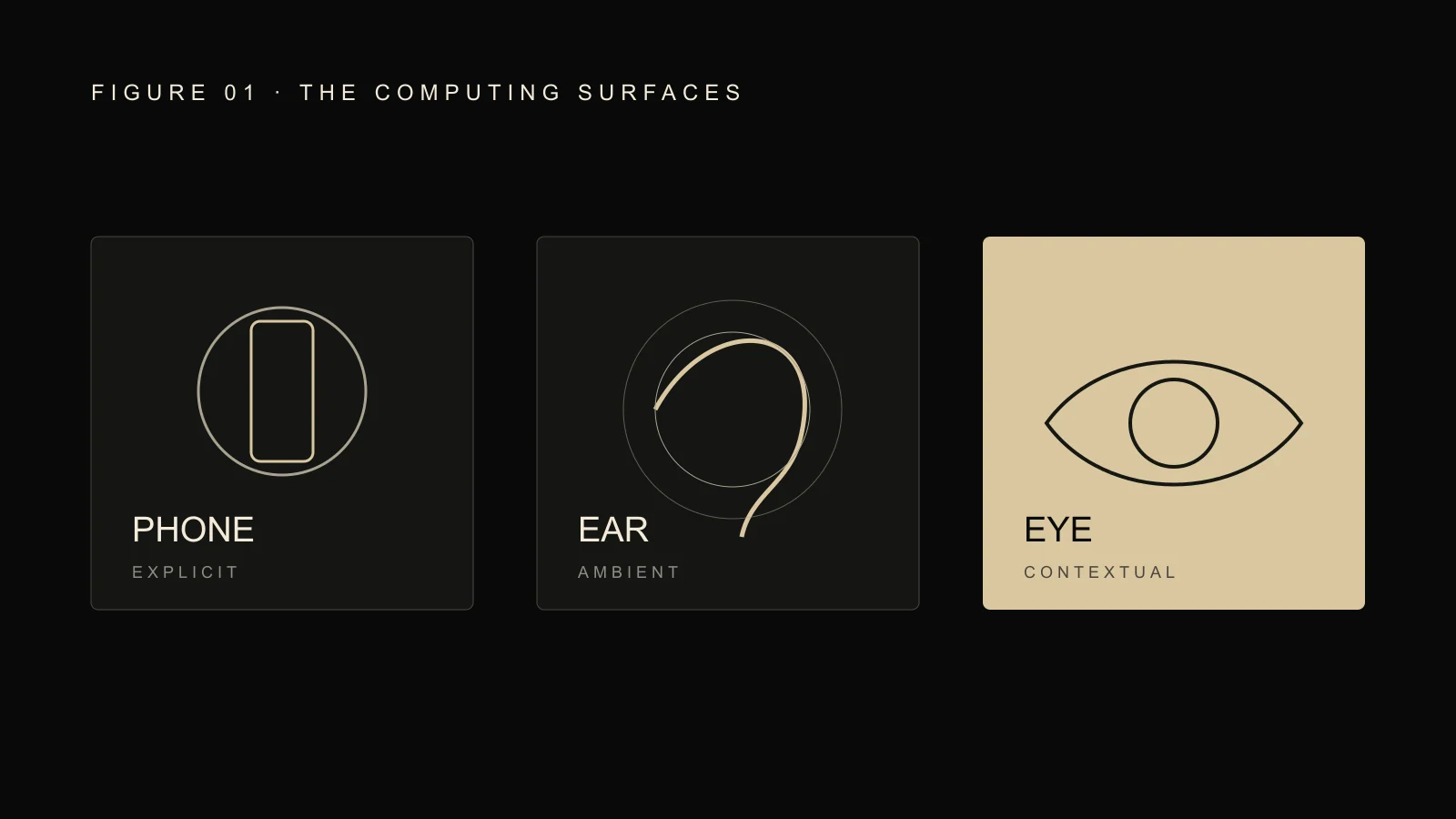
Context may matter more than apps
The smartphone era created an economy of icons.
One task, one app.
Smart glasses may create something different. Imagine asking for the name of a building while looking at it. Translating a sign without framing it manually with a phone camera.
Getting walking directions without repeatedly checking a map. Capturing a moment without taking out a device. Asking an assistant to act on something you are seeing.
In these situations, the important input is not a tap.
It is context.
Where you are.
What you are looking at.
What you just heard.
What you were already doing.
That makes smart glasses especially compatible with multimodal AI.
A model that can see, hear, remember context and call tools makes far more sense on a wearable than a menu-driven application does.
There may be two smart-glasses markets
Google has explicitly described two categories.
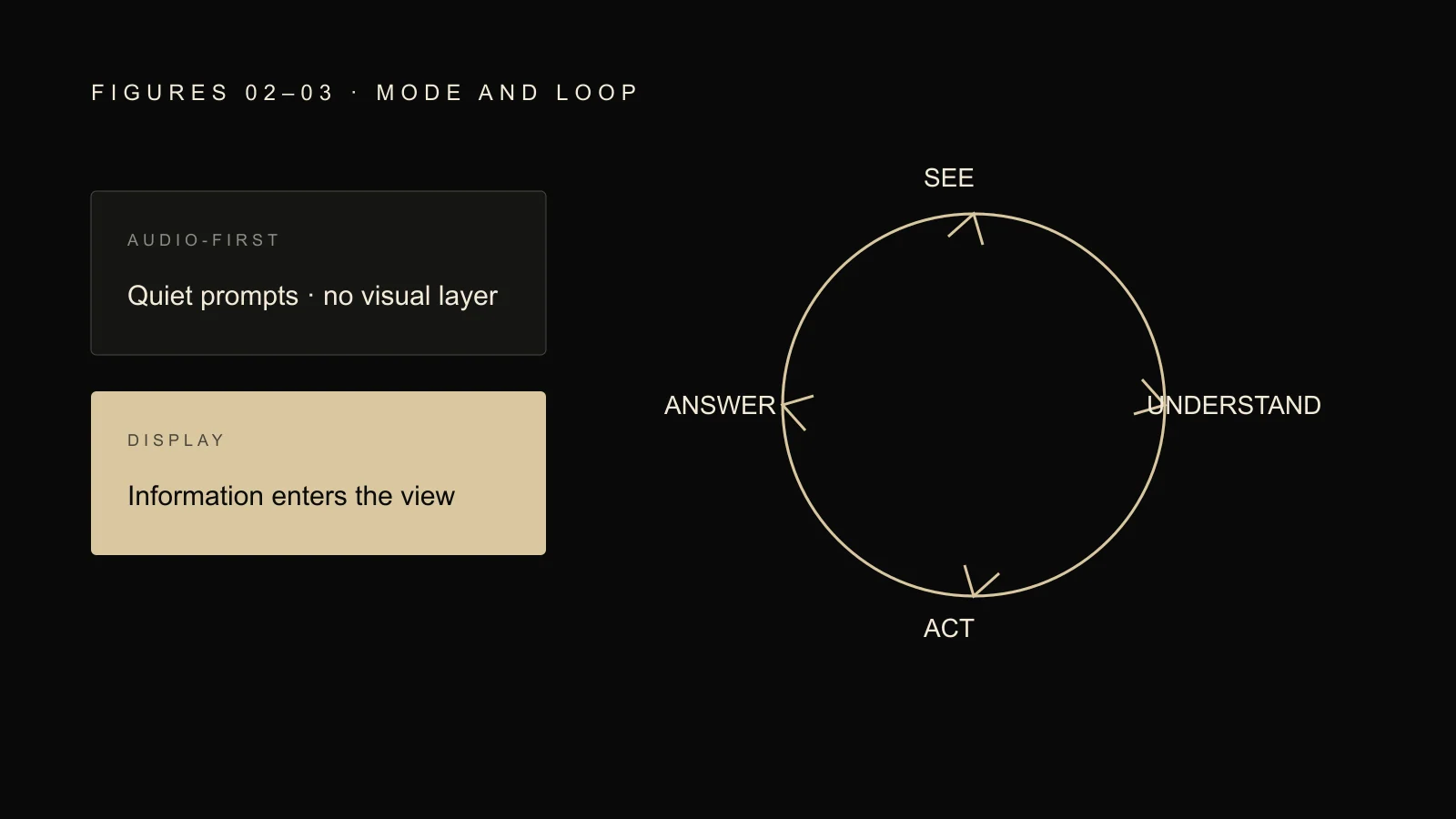
The first is audio eyewear. The second adds a display. That distinction may become fundamental.
Audio-first glasses
Advantages:
lower visual complexity
potentially more socially familiar
interaction can stay voice-led
useful for capture, calls, audio, translation and assistance
Limitations:
information has to be spoken or delegated
navigation and visual tasks have less bandwidth
users cannot glance at silent information
Display glasses
Potential advantages:
visual navigation
translation overlays
notifications
contextual labels
glanceable information
richer applications
But display systems also increase the difficulty.
Weight matters more. Battery matters more. Optics matter more. Social acceptability matters more.
Interface design becomes far more dangerous because a bad notification system attached to someone’s field of view would be unbearable. This is why the coming competition is not simply “who has the best AI.”
It is who designs the least annoying computer anyone has ever worn.
The developer opportunity is not obvious yet
Smartphone developers know their unit of design.
The screen.
The smart-glasses unit is less stable.
An experience may begin with voice, use the camera as input, perform a task on the phone, return audio in the ear and only occasionally need visual output.
That means developers may need to stop thinking in screens and start thinking in moments. What does the user need while walking? What can happen without confirmation?
What should never happen without confirmation? How long can the system hold context?
What should be remembered?
What should disappear immediately?
When is audio better than display?
When should the glasses do nothing?
That last question may be the most important one.
The best smart-glasses app may feel almost invisible
The first smartphone apps were often websites squeezed into a smaller rectangle. The first wave of glasses software will probably repeat the same mistake by trying to move conventional app interfaces closer to the eyes. The native form will be different.
A great glasses product may have almost no persistent interface. It may appear for fifteen seconds, solve one problem and disappear. The more contextual the device becomes, the more restraint becomes a feature.
That makes smart glasses unusually aligned with a design principle Zerionia already finds interesting: focused software. Not software that tries to occupy the user. Software that knows exactly when it should exist.
Verdict
Smart glasses are still early. Hardware limitations are real. Privacy questions are real. Social acceptance is unresolved.
But the direction is much clearer than it was during previous wearable cycles. The largest platforms are not treating glasses as a novelty peripheral. They are treating them as a place where AI can live.
If that works, the category will not be defined by the frames. It will be defined by the new behaviors those frames make normal. And once a new behavior becomes normal, an entire software market tends to appear behind it.