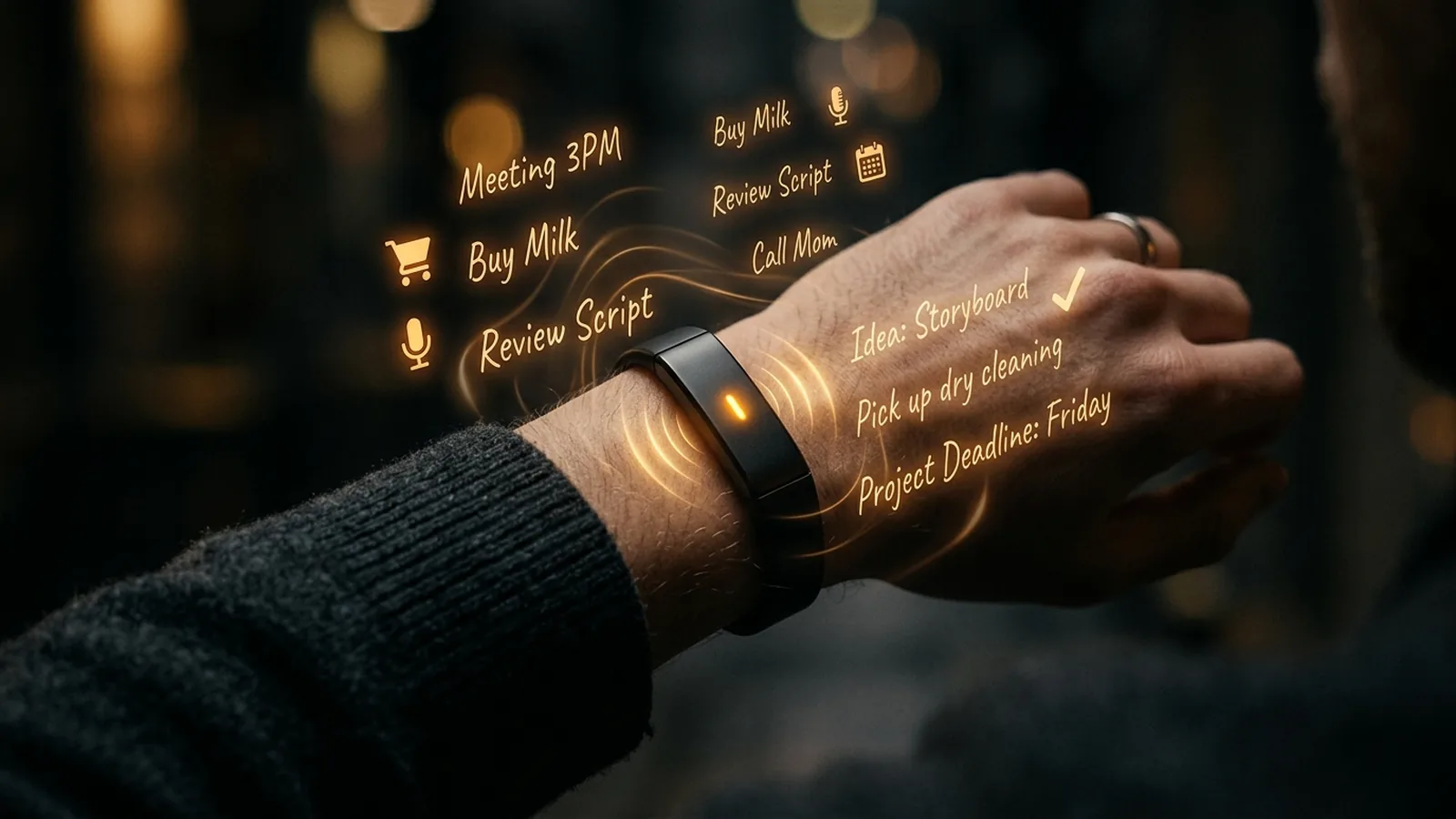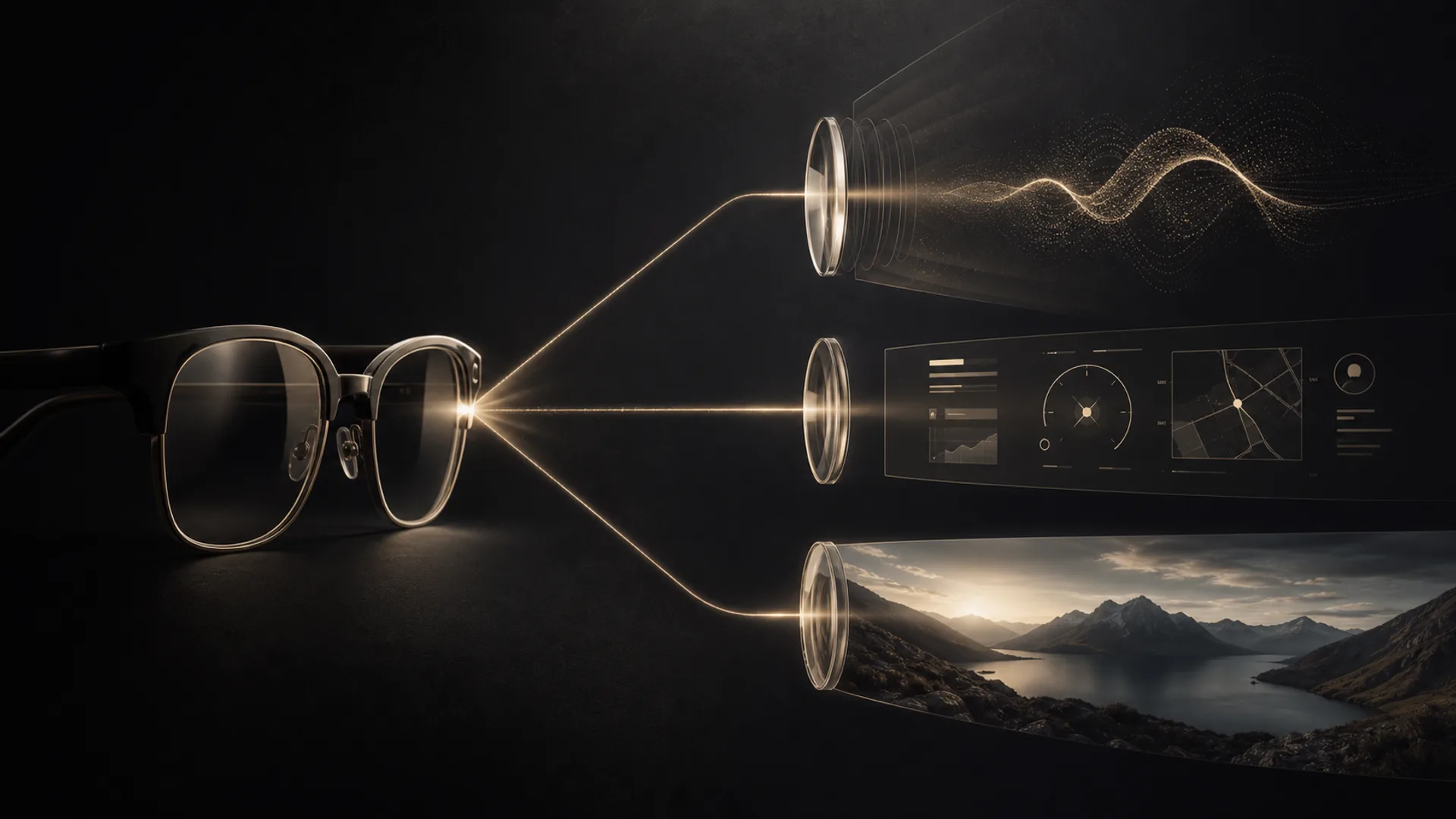
“Smart glasses” is becoming too broad to describe a product category. The market is separating into three jobs: ambient assistance, glanceable information and immersive display.
RayNeo’s August announcement makes the split unusually clear. Its iO glasses target everyday AI interaction, while the GT and GT Max emphasize cinematic display. The products go on sale September 4, alongside the opening of IFA in Berlin.
One shape, different contracts
Audio-first glasses promise availability. They compete on comfort, capture, battery life and assistant usefulness. Display glasses promise information in the field of view. They compete on brightness, legibility and interaction. Cinema glasses promise a private large screen. They compete on optics, resolution and media compatibility.
Those are different user contracts. Combining them in one comparison table obscures more than it reveals. A lighter assistant product may be better precisely because it does not attempt immersive display. A cinema device may accept a cable because its value is visual fidelity, not all-day wear.
The platform question comes later
The smartphone became a platform after hardware, input and distribution converged. Glasses are still negotiating those foundations. Developers should therefore design around a specific job rather than an abstract spatial-computing future.
For Radar, the useful signals are now segment-specific: shipment dates, developer access, input method, field of view, weight, battery mode and regional availability. “AI-powered” is not a sufficient status update.
The category is not failing to converge. It is discovering that the face can host several products with different reasons to exist.